Seotly — a live AI product, not a demo
Sixteen specialized AI agents continuously scan a website for SEO issues and explain what's wrong in plain language, not jargon. One developer built the entire platform end to end — React frontend, Python backend, database, deployment — and it's live right now at tryseotly.com, running real free audits for real visitors.

Seotly — An AI-Powered SEO Platform, Built End to End at Parix.ai
SEO has a strange reputation. Everyone knows it matters, and almost nobody enjoys doing it. The work is fiddly and endless — checking meta tags, chasing broken links, second-guessing header structure, wondering whether your schema markup is actually doing anything. It is the kind of work that rewards patience and punishes the people who do not have the time for it, which is to say most people running a website.
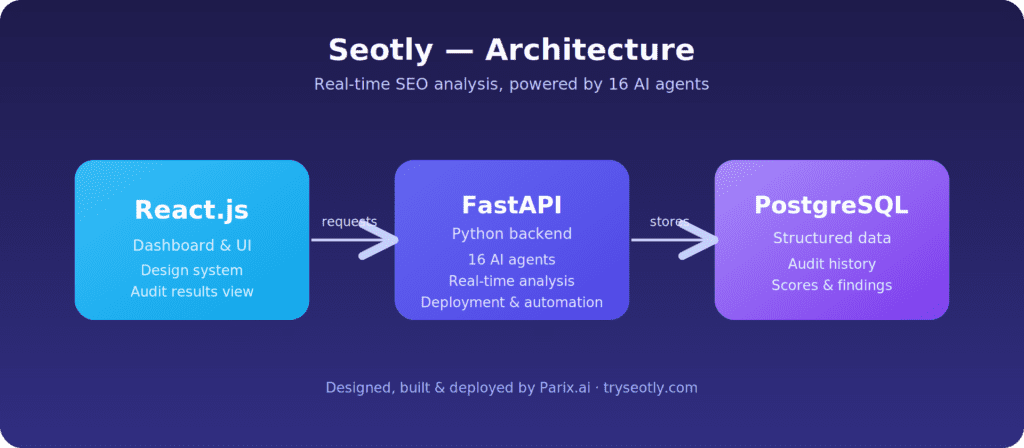
Seotly was built to take that weight off their shoulders. It is an AI-powered SEO platform that puts sixteen specialized AI agents to work analyzing a website in real time, turning a tangle of technical checks into something a person can actually read and act on. And it was designed and built, front to back, by a single full-stack developer at Parix.ai.
What Seotly Set Out to Do
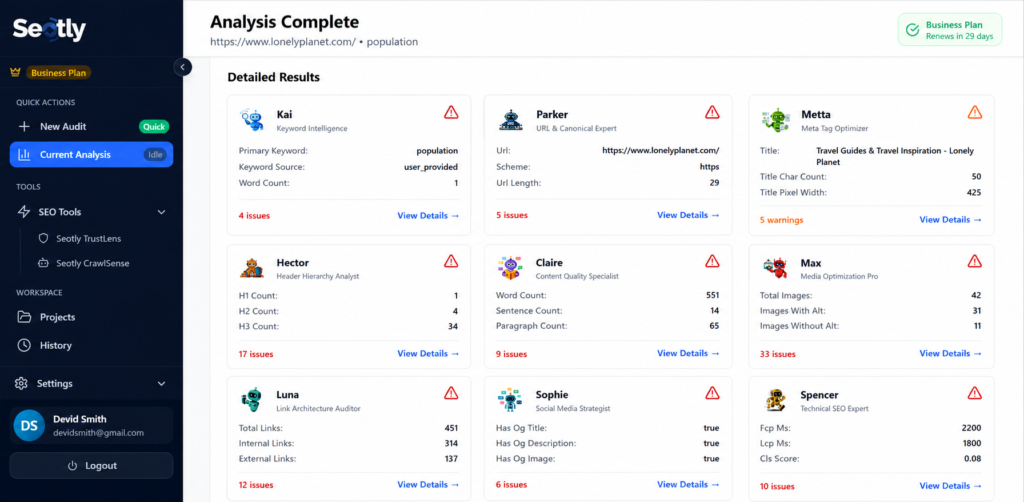
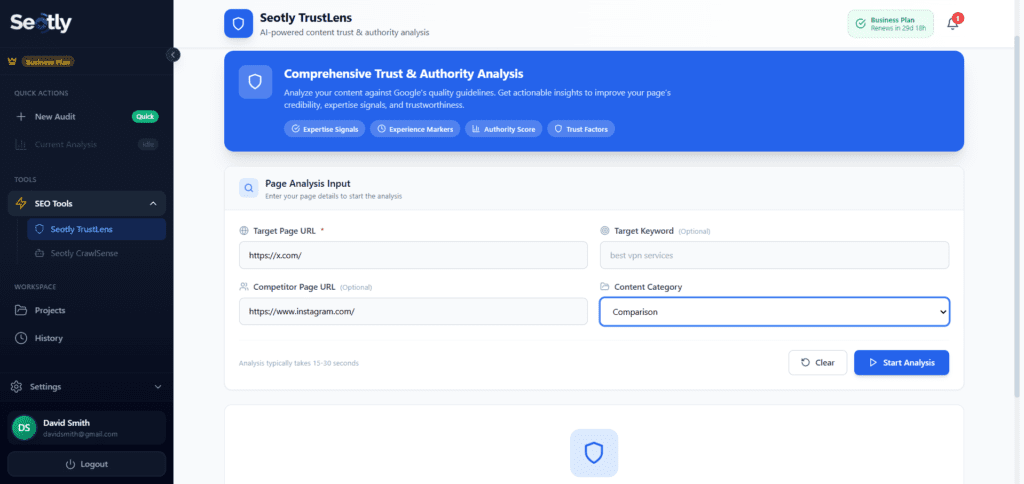
The premise behind Seotly is simple to say and hard to build. Instead of asking a business owner to learn the language of technical SEO, the platform does the analysis for them and hands back something useful. A user points Seotly at their website, and a team of sixteen specialized AI agents goes to work, each one focused on a different slice of the picture — keywords, meta tags, headers, links, schema markup, and the rest of the on-page and technical factors that quietly decide whether a site gets found.
What makes the product feel different is that it runs in real time and never really clocks out. Those agents work around the clock, so the analysis is not a one-off report that goes stale the moment you close it. The goal was always to give people a comprehensive audit without the comprehension headache — a clear read on what is working, what is broken, and what to fix first, delivered in plain terms rather than a wall of jargon.
One Developer, the Whole Stack
The most distinctive thing about how Seotly was made is who made it. This was not a project passed between a design team, a frontend group, and a separate backend department. Parkash Kumar took it on as both the UX/UI designer and the full-stack developer, owning every layer from the look of the dashboard down to the database schema that stores the results.
That kind of single ownership is rare for a reason — it asks one person to be fluent in design thinking and backend engineering at the same time. But when it works, it produces something unusually coherent. There were no handoffs to lose detail in, no mismatch between what the interface promised and what the system could deliver. Every decision about how a result should look could be weighed against how the data behind it actually behaved, and that tight loop shows in the finished product. It is the same end-to-end approach Parix.ai brought to the Design Pro full-stack build.
Designing the Dashboard Experience
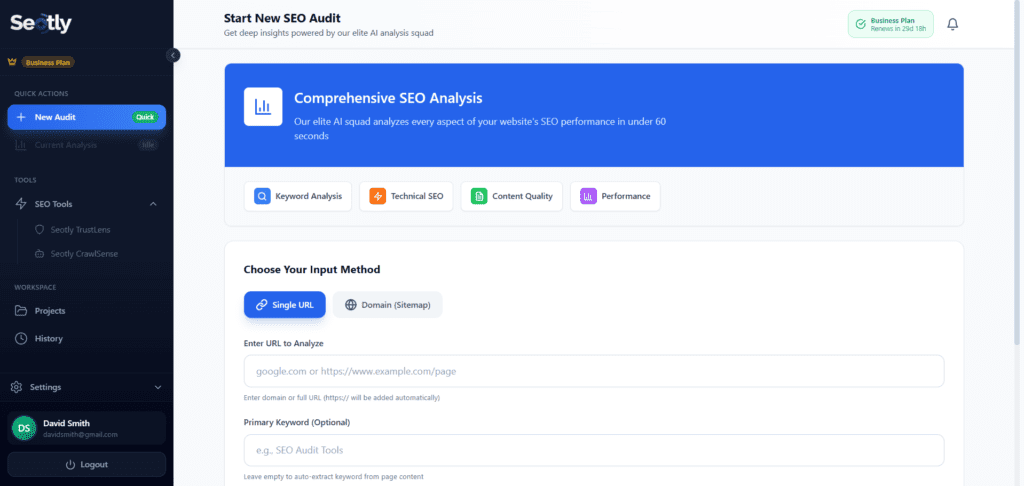
A tool like Seotly lives or dies by its dashboard. You can run the smartest analysis in the world, but if the results land as an intimidating spreadsheet, most people will close the tab and never come back. So the experience came first. Parkash designed the complete dashboard experience, shaping how a user moves from “analyze my site” to “here is exactly what to do next” without ever feeling lost along the way.
The harder challenge was managing complexity. Sixteen agents generate a lot of information, and the design’s real job was to keep that volume from overwhelming the person reading it. Good SEO data is only valuable if it is legible, so the dashboard had to surface what matters, group related findings, and let users drill into detail only when they want it. The result is an interface that respects both the depth of the analysis and the limited patience of a busy user.
A Design System, Not Just Screens
Beyond individual screens, Parkash built a complete design system for the platform. This is the part of the work users never consciously notice but always feel — the shared set of components, colors, spacing, and patterns that make every part of the product look and behave like it belongs to the same family.
A design system is an investment in the future of the product. It means new features can be assembled from consistent, reusable pieces instead of being reinvented each time, and it keeps the experience steady as Seotly grows. Built in React.js, the frontend turns that system into a fast, responsive interface where the polish is structural rather than skin-deep.
The Engine Behind the Agents
Underneath the dashboard sits the part of Seotly that does the heavy lifting. Parkash developed the FastAPI backend services that power the platform, along with the PostgreSQL database architecture that holds everything together. The choice of tools here was not incidental — it maps neatly onto what an AI-driven product actually needs.
Python is the natural home of AI and analysis work, and FastAPI is built for exactly this kind of job: fast, modern, and well-suited to serving the kind of real-time responses that Seotly’s sixteen agents depend on. The backend is where the analysis is coordinated, where requests are handled, and where the raw findings get shaped into something the frontend can present cleanly. For a platform that promises real-time results, the speed and structure of that backend is not a nice-to-have — it is the product.
A Database Built for Structured Insight
PostgreSQL was chosen to anchor the data layer, and it is a fitting pick for a product built on analysis. SEO audits are inherently structured — scores, categories, findings, and the relationships between them — and PostgreSQL is exceptional at exactly that kind of organized, reliable data. It gives Seotly a solid foundation to store audit history, track changes over time, and keep results trustworthy as the volume of analyses grows.
Designing that database architecture is quiet, careful work, but it is what lets the rest of the platform stay fast and dependable. A well-structured database means the dashboard can pull what it needs quickly and the agents can write their findings without the system buckling under its own complexity.
Shipping It, and Keeping It Running
Building a product is only half the battle. Getting it live, keeping it stable, and making updates painless is the other half — and it is the half that often gets neglected. On Seotly, Parkash implemented the deployment and automation workflows that take the project from “works on my machine” to a real, running product that people can rely on.
Automation here means fewer manual steps, fewer chances for human error, and a smoother path from a code change to that change being live. For a completed, in-production tool like Seotly, this is what separates a polished product from a fragile one. It is the unglamorous engineering that nobody sees but everybody benefits from, and it reflects a way of building that takes the whole lifecycle seriously, not just the parts that are fun to demo.
A Finished, Working Product
Seotly is a completed project, and it is live today at tryseotly.com. That word — completed — carries weight. It means the dashboard was designed, the design system was built, the FastAPI backend and PostgreSQL architecture were developed, and the deployment and automation were put in place, all the way through to a real product that real people can use. The free analysis on the homepage is not a mockup or a promise; it is the thing, working.
What makes the project a strong showcase is the range it covers. The same person handled the UX and UI, the React frontend, the Python and FastAPI backend, the PostgreSQL data layer, and the deployment pipeline. That is the full arc of modern product development carried by one developer, and the cohesion that results is exactly what you would hope for from end-to-end ownership.
Why It Matters for Parix.ai
Seotly is a clear statement of what Parix.ai can build. It takes a genuinely complex idea — an AI platform with sixteen agents running real-time analysis — and turns it into a clean, usable product that solves a real problem for real people. The technical depth is there in the backend and the data architecture, and the human touch is there in a dashboard designed to make sense of all of it.
For a business weighing up whether to trust Parix.ai with their own product, Seotly answers the question directly. It shows that the team can take an ambitious concept all the way from a blank design file to a live, automated, production application — and do it with the kind of care that holds up after launch. That is the difference between building software and building something people can actually depend on.
Before and After
Before
- Technical SEO checked by hand: meta tags, broken links, header structure, schema markup
- Audits arrived as one-off reports that went stale the moment they were closed
- Findings written in language only someone who already knows technical SEO can act on
After
- Sixteen specialised AI agents analyse a site in real time, continuously
- Results stay current instead of expiring, because the agents do not stop
- Findings are grouped and written in plain terms, so a busy owner can act without learning SEO first
The Outcome
Seotly is live and in production at tryseotly.com. The free analysis on the homepage is the working product, not a mockup or a promise.
A full audit runs from a single URL through a clean, guided flow, and the dashboard was built so that sixteen agents’ worth of findings stay legible rather than landing as an intimidating spreadsheet. That was the harder half of the problem: good SEO data is only valuable if someone can actually read it.
The whole build — UX and UI, the design system, the React frontend, the FastAPI and Python backend, the PostgreSQL data layer and the deployment pipeline — was carried end to end by one developer. There were no handoffs to lose detail in, which is why the interface and the system behind it behave like one product rather than two.
Ready to streamline your operations?
Parix.ai helps growing businesses identify repetitive tasks, improve workflow visibility, and build smarter systems that save time as the business scales.
Talk to Parix.ai