Web Development in 2026: A Clear Guide to Front-End, Back-End, and What’s Changing
What Web Development Actually Is
At its core, web development is the process of building and maintaining websites and web applications, everything from a simple brochure site to a full online store or a complex web app. Some of it is the part you see and interact with; a lot of it is the machinery running quietly in the background. If you want to go deeper on any single piece, MDN Web Docs is the reference most developers actually trust for how the underlying web technologies work. For now, the easiest way in is to split the whole thing into three types.The Three Types of Web Development
Front-end
is the visible side, the part the user sees and touches. Layout, buttons, forms, colors, the way things respond when you tap them. A front-end developer’s job is to make the page clear, attractive, and easy to use, so people can get what they came for without thinking about it. Most of that comes down to a short list of design decisions — spacing, type hierarchy, line length and contrast — that decide whether a page reads as professional or amateur.
Back-end
is the engine room, the server side nobody sees. This is where the databases, the server logic, and the rules that make everything work actually live. When you log in, save something, or make a payment, the back-end is what’s handling it behind the scenes.
Full-stack
covers both ends at once. A full-stack developer can move between the interface and the server, which is why so many real projects are built this way, and it’s the approach behind most of our own web development work. One person, or one team, holding the whole picture tends to make for a more coherent product.
How a Website Gets Built
It usually starts with planning, not code. You work out what the site is for, who it’s for, and what it actually needs to do. Skip this part and you tend to pay for it later. Once the plan is solid, design comes next, followed by the real development work where the front-end and back-end get written. Then comes testing to catch the things that break, launch, and, importantly, the ongoing maintenance that keeps a site healthy long after it goes live. You can see this full arc play out in our full-stack development case study, where the Design Pro workspace went from plan to a working product.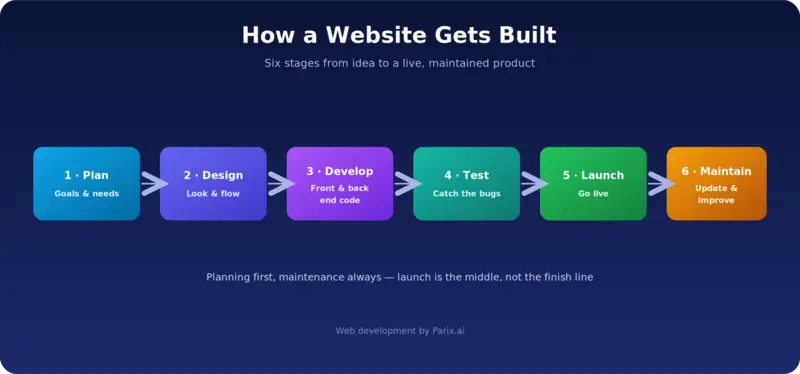
Why It Matters for Your Business
For most companies the website is the first real handshake with a customer, and first impressions stick. A fast, clear, trustworthy site builds confidence; a slow or confusing one quietly sends people to a competitor. This matters even more for web apps and platforms, where the product itself lives in the browser and good SaaS product development depends on getting it right. Speed isn’t a nice-to-have either, it’s measured and it affects your search ranking. Google’s Core Web Vitals turn things like load time and visual stability into real numbers, and a site that scores well tends to keep visitors and rank better. Performance is part of the product now, not an afterthought.Web Development in 2026
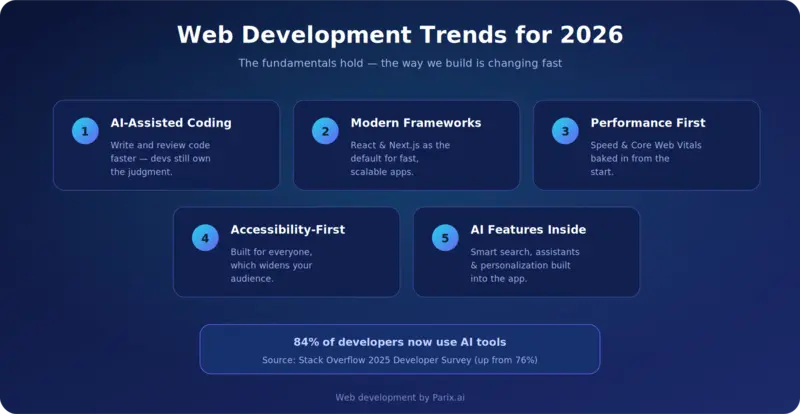
The basics, front-end, back-end, planning, testing, haven’t gone anywhere. But how the work gets done is shifting quickly. Here’s what’s shaping web development this year: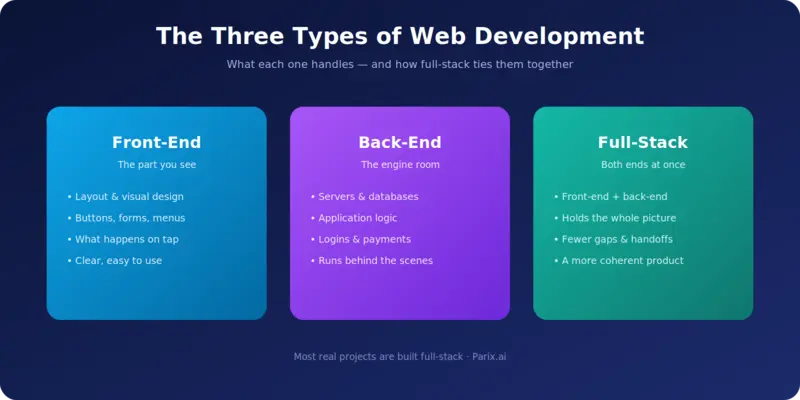
- AI-assisted coding: developers use AI to write and review code faster, while still owning the judgment that keeps it correct.
- Modern frameworks: tools like React and Next.js are now the default for fast, scalable web apps.
- Performance by default: speed and Core Web Vitals are baked in from the start, not bolted on at the end.
- Accessibility-first: building for everyone, which widens your audience and is increasingly expected.
- AI features inside products: search, recommendations, and assistants built right into the app.
Where Design Meets Development
It’s worth saying that great web development and great design aren’t separate jobs, they’re two halves of the same product. The cleanest code in the world won’t save a confusing interface, which is why solid branding and UI/UX work hand in hand with the build. The goal is a site that’s both well-engineered underneath and genuinely pleasant to use on top.What It Looks Like in Practice
A good way to see all of this come together is a real product. Seotly, an AI-powered SEO platform, is a full web application with a modern front-end, a solid back-end, and AI woven through it, and the Seotly case study walks through how it was built. It’s a clear picture of what modern, full-stack web development actually delivers.How Parix.ai Helps
At Parix.ai, we build websites and web applications from the ground up, front-end, back-end, and the AI features that increasingly come with them. The aim is always the same: something fast, reliable, and easy to use, built on solid foundations so it holds up as your business grows. Whether it’s a first website or a complex platform, we handle the full stack so you don’t have to stitch it together yourself.Conclusion
Web development is the backbone of doing business online, and it’s only getting more important as the web gets faster, smarter, and more central to how people choose who to trust. Understanding the basics, front-end, back-end, and how they come together, is a great start, and 2026’s AI-driven tools are making it an exciting time to build. If you’ve got a website or web app in mind, get in touch with Parix.ai.FAQs
What is web development?
It’s the work of building and maintaining websites and web applications, covering the part users see (front-end), the server side that powers it (back-end), and everything in between.
What’s the difference between front-end, back-end, and full-stack?
Front-end is the visible interface users interact with. Back-end is the server, database, and logic behind the scenes. Full-stack means working across both.
How is AI changing web development in 2026?
Most developers now use AI tools to write and review code faster, and more products ship with AI features like smart search and assistants built in. AI is becoming a standard part of how sites get built, not a replacement for developers.
Why is website speed so important?
Speed affects both how long visitors stay and how well you rank on Google, which measures it through Core Web Vitals. A faster site usually means better engagement and better search visibility.
Do I need a website or a web app for my business?
A website is great for presence and information; a web app is better when users need to do things, like accounts, dashboards, or transactions. Many businesses end up needing a bit of both.
Want a ballpark before you brief a developer? Our free Website Cost Calculator estimates the range based on your features and pages.