

Learn how SaaS product development goes from concept to market-ready with scalable architecture, security, and growth strategies
Parix AI Team
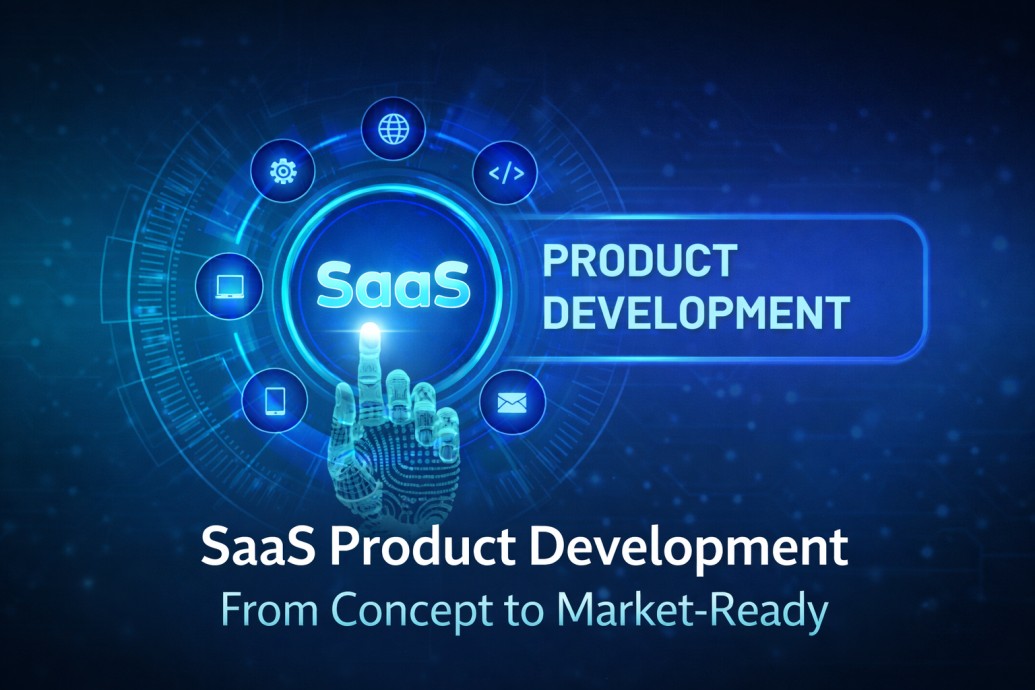
SaaS product development is the process of designing, building, launching, and scaling software delivered through the cloud. Unlike traditional software, SaaS products must be continuously improved, secure, scalable, and user-centric. From the initial idea to a fully market-ready solution, every stage requires careful planning, execution, and alignment with business goals.
In today’s competitive digital landscape, successful SaaS product development is not just about writing code—it is about creating a product users trust, enjoy, and rely on.
Understanding the SaaS Product Development Lifecycle
A structured SaaS product development lifecycle helps teams reduce risk, improve efficiency, and deliver value faster. The journey typically moves through three core stages: concept, launch, and market readiness.
Each stage plays a crucial role in shaping a scalable and sustainable SaaS product.
Stage 1: Concept and Product Discovery
Every successful SaaS product begins with a strong concept. This stage focuses on identifying a real problem and validating the solution before development begins.
Key activities during the concept stage include:
Market research and competitor analysis
Defining the target audience and user personas
Identifying core features and value proposition
Validating ideas through MVP planning
Product discovery helps ensure that development efforts align with actual user needs rather than assumptions. A clear roadmap at this stage prevents costly changes later.
Stage 2: Design and Architecture Planning
Once the concept is validated, the focus shifts to design and technical planning. This stage determines how users will interact with the product and how the system will scale.
Important elements include:
UI UX design: Creating intuitive interfaces and smooth user journeys
System architecture: Planning scalable, cloud-native infrastructure
Security planning: Ensuring data protection and compliance
Technology stack selection: Choosing frameworks and tools for long-term growth
Strong design and architecture decisions lay the foundation for performance, scalability, and user satisfaction.
Stage 3: Development and MVP Build
The development phase turns ideas into a working product. Agile methodologies are commonly used to allow flexibility and faster iteration.
Key aspects of SaaS development include:
Backend and frontend development
API and third-party integrations
Cloud infrastructure setup
Feature prioritization based on MVP goals
Building an MVP allows teams to launch faster, gather feedback, and validate assumptions without over-engineering the product.
Stage 4: Testing and Quality Assurance
Before launch, thorough testing is essential to ensure reliability and performance. SaaS users expect seamless experiences, and even small issues can affect trust.
Testing focuses on:
Functional testing
Performance and load testing
Security testing
Cross-device and browser compatibility
A stable and well-tested product reduces churn and improves early adoption.
Stage 5: Launch and Deployment
Launching a SaaS product involves more than making it live. It requires careful coordination across development, marketing, and support teams.
Launch activities include:
Cloud deployment and monitoring
Onboarding flows and documentation
Analytics and tracking setup
Support and feedback channels
A smooth launch creates a positive first impression and sets the stage for growth.
Stage 6: Market-Ready Optimization and Scaling
After launch, the product enters the market-ready phase. This stage focuses on continuous improvement, performance optimization, and scaling.
Key priorities include:
Collecting user feedback and usage data
Iterating features based on real behavior
Improving performance and infrastructure
Scaling to handle growing user demand
Successful SaaS products evolve constantly to stay competitive and relevant.
Why UI UX Matters in SaaS Product Development
UI UX design is a critical component of SaaS success. Even powerful features can fail if users find the product difficult to use.
Effective UI UX in SaaS:
Reduces user friction
Improves onboarding and adoption
Increases retention and engagement
Builds trust and brand credibility
User-centered design ensures that the product delivers value from the first interaction.
Benefits of a Structured SaaS Product Development Approach
A well-defined development process offers long-term benefits:
Faster time to market
Lower development risk
Scalable architecture
Better user experience
Stronger product-market fit
Businesses that invest in structured SaaS development are better positioned to grow and adapt.
Conclusion
SaaS product development is a journey that requires strategic thinking, technical expertise, and continuous improvement. From concept to market-ready, every stage plays a vital role in building a product that users trust and businesses can scale.
By focusing on user needs, scalable architecture, and iterative development, businesses can turn ideas into successful SaaS products that deliver lasting value in a competitive market.
Tags:
Comfortable full leather lining eye-catching unique detail to the toe low ‘cut-away’ sides clean and sleek harmony.
Adamson Janny
SaaS product development is the process of designing, building, launching, and scaling software delivered through the cloud. Unlike traditional software, SaaS products must be continuously improved, secure, scalable, and user-centric. From the initial idea to a fully market-ready solution, every stage requires careful planning, execution, and alignment with business goals.
In today’s competitive digital landscape, successful SaaS product development is not just about writing code—it is about creating a product users trust, enjoy, and rely on.

Understanding the SaaS Product Development Lifecycle
A structured SaaS product development lifecycle helps teams reduce risk, improve efficiency, and deliver value faster. The journey typically moves through three core stages: concept, launch, and market readiness.
Each stage plays a crucial role in shaping a scalable and sustainable SaaS product.
Why UI UX Matters in SaaS Product Development
UI UX design is a critical component of SaaS success. Even powerful features can fail if users find the product difficult to use.
Effective UI UX in SaaS:
Reduces user friction
Improves onboarding and adoption
Increases retention and engagement
Builds trust and brand credibility
User-centered design ensures that the product delivers value from the first interaction.
Benefits of a Structured SaaS Product Development Approach
A well-defined development process offers long-term benefits:
Faster time to market
Lower development risk
Scalable architecture
Better user experience
Stronger product-market fit
Businesses that invest in structured SaaS development are better positioned to grow and adapt.
Conclusion
SaaS product development is a journey that requires strategic thinking, technical expertise, and continuous improvement. From concept to market-ready, every stage plays a vital role in building a product that users trust and businesses can scale.
By focusing on user needs, scalable architecture, and iterative development, businesses can turn ideas into successful SaaS products that deliver lasting value in a competitive market.