GPT Image 2 for Business: Create Smarter AI Visuals, Creative Ads, and Marketing Content Faster
Visual content has become one of the most powerful tools in modern digital marketing. Whether your business publishes blog posts, runs Google ads, creates social media campaigns, builds product pages, or designs SaaS mockups, visuals play a critical role in how your audience understands and trusts your brand.
However, the traditional process of creating visual content can be time-consuming and complex. It often requires designers, multiple revisions, detailed briefs, brand approvals, and extensive editing. This can slow down your marketing efforts, especially when your team needs content quickly.
This is where GPT Image 2 becomes highly valuable.
Released by OpenAI on April 21, 2026, GPT Image 2 is an advanced image generation model that significantly improves text rendering, multilingual support, and visual reasoning. For developers, it is available through the API under the name gpt-image-2.
For businesses, GPT Image 2 is more than just another AI image tool—it represents a faster, smarter, and more efficient way to create high-quality visual content at scale.
Parix.ai focuses on delivering business solutions powered by artificial intelligence, helping organizations optimize workflows, enhance digital processes, develop SaaS products, and implement smart integrations.
GPT Image 2 aligns perfectly with this vision, enabling businesses to move away from time-consuming manual design processes and adopt faster, AI-driven content creation.
The Importance of GPT Image 2 for Businesses
Visual content is an essential part of daily business operations. Companies need visuals for blog posts, landing pages, advertisements, product launches, emails, presentations, social media, and even internal communication.
However, creating these visuals manually can be both time-consuming and expensive, especially when multiple revisions and iterations are required.
This is where GPT Image 2 becomes highly valuable. It enables businesses to create high-quality visuals quickly and cost-effectively, reducing the dependency on traditional design workflows.
Instead of waiting days for the first version of a design, businesses can now generate multiple variations within minutes. Speed only pays off if the output holds up, which comes down to the design decisions that separate a page that works from one that merely looks nice. AI can provide a strong starting point, eliminating the need to build concepts from scratch.
In addition, companies are no longer limited to generic stock images. They can create customized visuals tailored to their message, brand, and target audience.
Speed is critical in today’s competitive environment. Businesses that can create and adapt their content faster gain a clear advantage.
This approach aligns closely with the broader vision of Parix.ai, where efficiency, scalability, and intelligent automation drive business growth.
GPT Image 2 Key Features
GPT Image 2 offers several powerful features that make it highly effective for creating business-focused visual content.
One of its main advantages is the ability to generate high-quality images. Businesses no longer need to rely solely on generic stock visuals when creating content for marketing campaigns, websites, or product storytelling.
Another key feature is advanced image editing. GPT Image 2 allows users to upload or select an existing image and refine it by adjusting backgrounds, modifying styles, or enhancing overall visual quality. According to
OpenAI documentation
, users can edit both generated and uploaded images simply by describing the desired changes.
Improved text rendering is another major benefit. This is especially useful when designing ads, banners, posters, and other visuals that include text. GPT Image 2 handles text placement and readability more effectively, making designs look more polished and professional.
In addition, GPT Image 2 demonstrates stronger visual reasoning. It better understands layout, object placement, and overall design structure, helping produce more coherent and visually appealing results.
It also supports production workflows more effectively. According to
OpenAI’s prompting guide
, the model offers improved image quality, more efficient editing, consistent text rendering, and stronger support for structured, production-ready visuals.
These capabilities position GPT Image 2 not just as a tool for creative experimentation, but as a reliable solution for scalable, business-focused content creation.
What Makes the Tool Effective in Creating Marketing Visuals?
Effective marketing visuals require more than just attractive design. They need to communicate a message clearly and tell a story within seconds of being seen.
With GPT Image 2, marketers can quickly turn ideas into meaningful visuals that align with their goals and messaging.
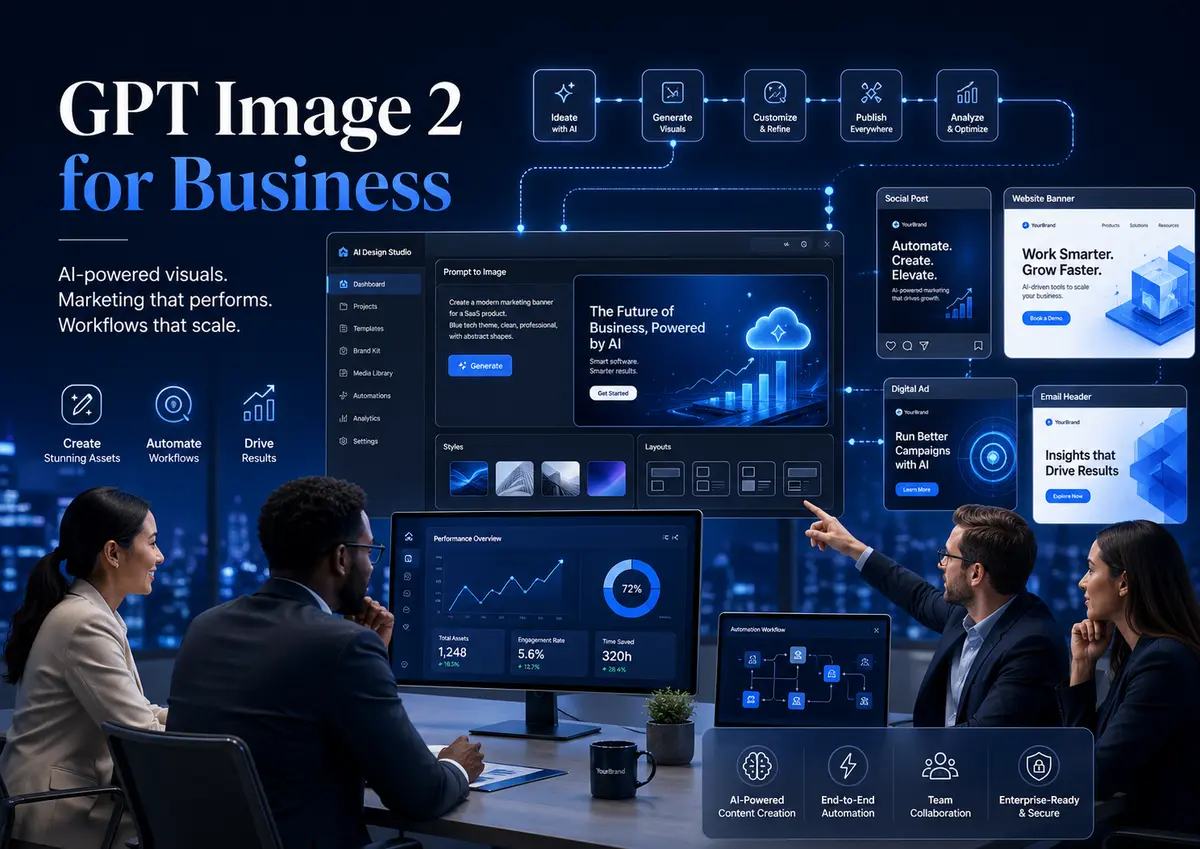
Instead of relying on generic images, such as a simple laptop graphic, marketers can generate visuals that are more specific and relevant. For example, they can create scenes that represent AI-powered dashboards, workflow automation, or teams analyzing campaign performance.
GPT Image 2 can be used to create a wide range of marketing assets, including blog visuals, social media graphics, email banners, website imagery, campaign creatives, paid ad visuals, infographics, case study graphics, and event-related designs.
One of the biggest advantages of GPT Image 2 is speed. Marketers can generate multiple visual variations within minutes, compare different options, and quickly refine their designs.
This makes GPT Image 2 a highly efficient solution for creating AI-driven marketing visuals and scaling content production.
Impact of GPT Image 2 on Creative Ads and Campaign Design
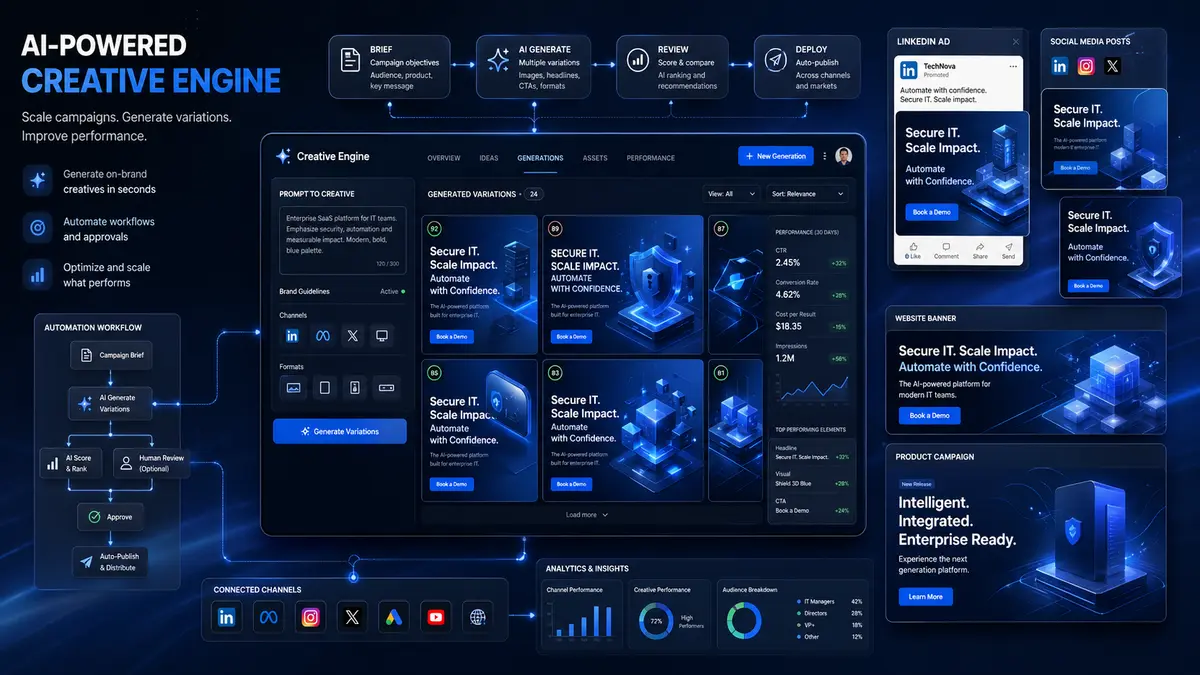
Creative ads are a critical component of digital marketing. Even with strong offers, accurate targeting, and a well-designed landing page, campaigns can fail to perform without compelling visuals that capture attention.
GPT Image 2 is transforming how businesses approach ad creative development by making the process faster, more flexible, and highly scalable.
One of its biggest advantages is the ability to generate multiple ad concepts in a short time. Marketers can experiment with different styles, messaging, colors, and visual approaches without relying on long design cycles.
This makes it easier to create a wide variety of ad formats, such as product-focused visuals, problem–solution creatives, before-and-after comparisons, benefit-driven illustrations, AI-inspired designs, and simple promotional banners.
Another key benefit is the ability to test and optimize. Marketers can generate multiple variations, compare performance, and quickly identify which creatives deliver the best results.
Additionally, GPT Image 2 helps smaller teams compete more effectively with larger companies. Even without dedicated design resources, teams can produce high-quality visuals at scale, enabling faster execution and better campaign performance.
How Businesses Can Create High-Quality AI Ad Creatives Quickly
To create effective ad creatives with GPT Image 2, businesses need to provide clear and detailed creative direction. The quality of the output largely depends on the quality of the prompt.
For example, a vague prompt like “Generate an ad for my company” will produce generic results.
In contrast, a well-structured prompt provides context and leads to much better outcomes. For instance:
Design a professional LinkedIn ad creative for an AI workflow automation company. Show a busy team replacing manual tasks with automated workflows. Use a modern B2B SaaS style with a blue and white color palette and include the message: “Automate Smarter. Scale Faster.”
This type of prompt provides enough detail to guide the model and generate more relevant and high-quality visuals.
When creating prompts, it is important to define key elements such as the target audience, company type, campaign goal, core message, visual style, brand colors, platform format, and call-to-action.
Additionally, businesses should generate multiple variations of their creatives. Different versions can focus on themes like time savings, cost efficiency, automation, or business growth.
By combining clear prompts with multiple variations, GPT Image 2 enables companies to produce high-quality ad creatives quickly and strategically.
Creating Visuals for Blogs, Social Media, and Banners with GPT Image 2
Blogs, social media posts, and banner ads all require different types of visuals to achieve their specific goals. GPT Image 2 makes it easy to generate the right kind of visuals for each use case.
For blog content, it can create relevant featured images tailored to the topic. For example, it can generate visuals that align perfectly with articles about GPT Image 2, workflow automation, or AI-driven marketing.
For social media, GPT Image 2 can produce eye-catching graphics with bold layouts, modern design elements, and campaign-focused messaging that helps capture attention while scrolling.
It can also generate professional banners for websites, including landing pages, product launches, and email headers, ensuring a consistent and polished brand presentation.
Example prompt for a blog featured image:
Create a professional blog featured image for an article about GPT Image 2 for business. Include AI-generated visuals, marketing dashboards, creative ad concepts, and workflow automation elements. Use a modern B2B technology style.
Example prompt for a LinkedIn graphic:
Create a LinkedIn post graphic about AI creative ads. Include a clean business design, a bold headline area, modern marketing visuals, and a professional SaaS color palette.
By using structured prompts like these, businesses can consistently create high-quality visuals for different platforms while maintaining a strong and cohesive brand identity.
How GPT Image 2 Assists Product Visuals, SaaS Mockups, and Website Graphics
Beyond marketing campaigns, GPT Image 2 provides significant value across various business and product development use cases. Product teams, SaaS companies, startups, agencies, and website creators can all benefit from its capabilities.
For SaaS businesses, GPT Image 2 can be used to generate mockups of dashboards, user interfaces, features, and onboarding flows. These visuals are especially useful during early-stage product development, as well as for pitch decks, landing pages, and marketing materials.
When it comes to product visuals, the tool enables the creation of lifestyle imagery, feature-focused graphics, promotional banners, and concept designs. This allows teams to quickly explore creative directions before investing in full-scale production.
GPT Image 2 is also highly effective for website design. It can generate hero images, service illustrations, section backgrounds, and visual explainers that enhance both user experience and brand presentation.
These use cases align closely with the services offered by Parix.ai, including web development, mobile applications, SaaS solutions, dashboards and analytics systems, cloud infrastructure, and workflow automation. By integrating tools like GPT Image 2, businesses can accelerate development while maintaining high visual quality.
How Can GPT Image 2 Enhance Visual Branding and Storytelling?
Branding goes beyond logos and color palettes. True brand success depends on how clearly and effectively a business communicates its message.
With GPT Image 2, businesses can transform ideas into visuals that simplify communication. Instead of relying solely on text to explain complex processes, companies can use images to illustrate concepts, outcomes, and transformations.
For example, a workflow automation company can visually demonstrate key ideas such as manual processes evolving into automated systems, disconnected tools becoming a unified platform, or teams becoming more productive through AI-driven workflows.
These types of visuals help break down complex concepts into clear and engaging stories that are easier for audiences to understand.
This is especially valuable for companies like Parix.ai, whose services—such as AI workflow automation, SaaS development, system integration, and business intelligence—can be complex. GPT Image 2 enables these services to be presented visually, making them more accessible, engaging, and compelling for potential customers.
Using Prompts to Generate High-Quality Creative Outputs
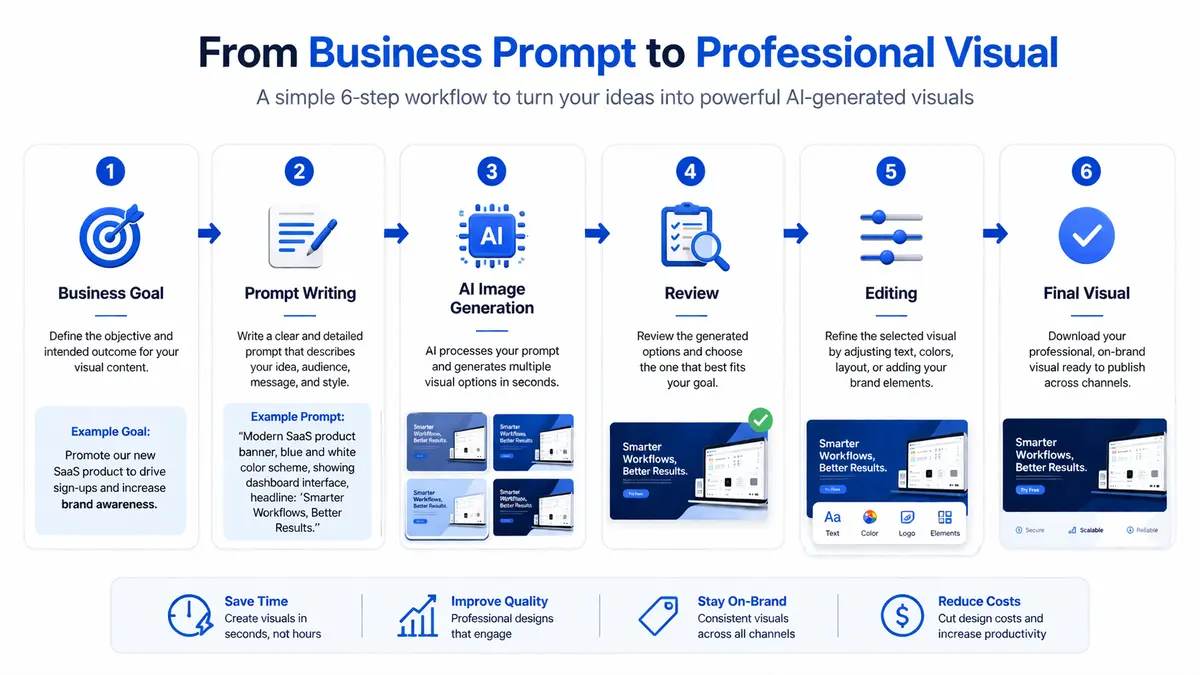
Crafting effective prompts is one of the most important skills when working with GPT Image 2. The quality of your output depends heavily on how clearly you define your requirements.
A well-structured prompt should include several key elements to guide the image generation process effectively.
First, define the purpose of the image. This could be for a blog post, advertisement, website banner, presentation, or product mockup. Next, consider the audience. Identify who the visual is intended for, such as business leaders, marketers, SaaS founders, agencies, or enterprise teams.
Then, clearly describe the subject of the image and what it should contain. After that, specify the visual style, whether it should look modern, professional, minimal, bold, futuristic, or aligned with a SaaS design aesthetic.
Branding direction is equally important. Define the colors, tone, and overall visual atmosphere so the output matches your brand identity. Finally, include the required format, such as square, landscape, banner, LinkedIn post, or blog header.
Recommended prompt structure:
Design a [type of image] for [business purpose]. Highlight [subject], using a [visual style]. Include [key details], apply [brand colors], and optimize it for [platform or format].
Example prompt:
Design a professional website banner for an AI workflow automation company. Highlight automation dashboards and team productivity, use a modern SaaS style, include clean UI elements, apply a blue and white color palette, and optimize for a website hero section.
By using structured prompts like these, businesses can generate more relevant, high-quality visuals and significantly improve the effectiveness of their AI-driven content creation process.
How GPT Image 2 Helps Automate Workflow for Content Production
GPT Image 2 is not only useful for creating a single image. Its real value comes from connecting it to an end-to-end content production workflow.
For example, a company can start by selecting a blog topic, using AI to create the article structure, and then generating a relevant featured image with GPT Image 2.
After that, the marketing team can review the image, while AI helps create alt tags, filenames, and web-ready versions. The same image can also be adapted into social media formats for different platforms.
Once the blog post and social media assets are ready, they can be scheduled for publication. This shows how GPT Image 2 can become an important part of AI workflow automation for creators and businesses.
Parix.ai focuses on replacing repetitive manual tasks with intelligent solutions that improve efficiency, accuracy, and scalability. AI workflow automation helps reduce delays, remove repetitive work, support better decision-making, and allow teams to focus on more important tasks.
Through automation, businesses can speed up their content production process, avoid manual bottlenecks, and build a smoother creative workflow.
With the help of integration of GPT Image 2 and automation tools, companies will be able to build efficient content pipelines.
Common Business Mistakes When Using AI-Generated Graphics
One of the biggest advantages of GPT Image 2 is the ability to generate visuals quickly. However, to get the best results, businesses need to follow certain best practices and avoid common mistakes.
First, providing clear and detailed prompts is essential. Without proper direction, the output is likely to be generic and less effective.
Second, consistency should never be overlooked. All generated visuals should align with your brand identity, including colors, style, and overall tone.
Third, always review the text within images. While text rendering has improved significantly, it is still important to check for spelling, formatting, and clarity.
Fourth, avoid publishing visuals without a thorough review. Pay close attention to layout, typography, faces and hands in images, dashboard elements, icons, charts, and product details.
Finally, AI should not be seen as a replacement for designers. Human creativity, strategy, and attention to detail remain essential for producing high-quality content.
In summary, GPT Image 2 is a powerful tool for generating multiple visual variations quickly. However, the best results come from combining AI efficiency with human insight, creativity, and strategic thinking.
How Parix.ai Helps Enterprises Leverage GPT Image 2 Through Automation
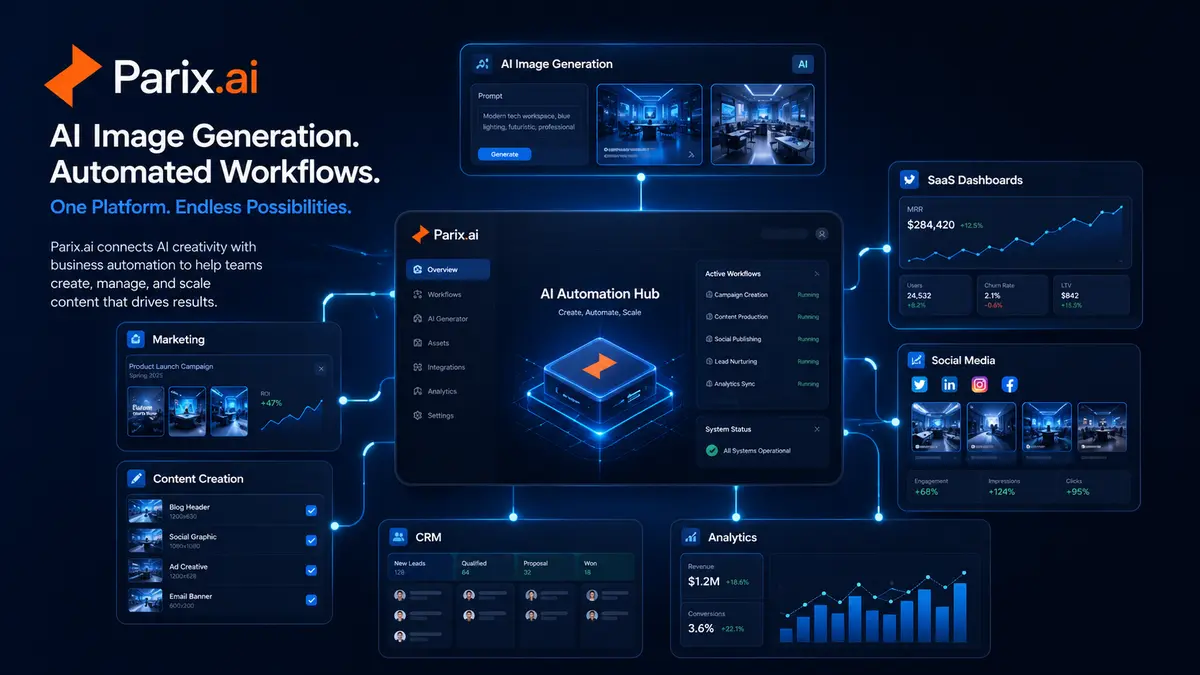
GPT Image 2 delivers the most value when it is integrated into a company’s workflow processes rather than used for one-off image creation.
While businesses can use AI tools manually to generate individual visuals, the real advantage comes from embedding image generation into automated workflows that streamline content production and marketing operations.
Parix.ai enables organizations to automate image generation and integrate GPT Image 2 across multiple business functions, including content creation, marketing workflows, blog publishing, social media scheduling, SaaS platforms, CRM automation, product content generation, campaign approvals, and analytics dashboards.
For example, a marketing agency can set up automated workflows where campaign briefs trigger the creation of ad concepts, social media visuals, and captions. Similarly, an e-commerce business can generate product banners during campaigns, while SaaS companies can create promotional graphics for product launches and feature updates.
This approach reduces manual effort, speeds up execution, and ensures consistent output across all channels.
Parix.ai’s approach—focused on thinking smarter, building faster, and automating processes—aligns perfectly with the capabilities of GPT Image 2. By combining AI-powered image generation with workflow automation, businesses can scale their content production and operate more efficiently.
Conclusion: The Future of AI-Generated Visuals and Creative Advertising
GPT Image 2 is more than just an AI image generator—it represents a major shift in how businesses create, refine, test, and scale visual content.
In marketing, it enables faster and more effective ad creation. In content production, it simplifies the generation of visuals for blogs and social media. For software teams, it accelerates the creation of mockups, dashboards, and product visuals. Agencies can also benefit by speeding up campaign ideation and execution.
Businesses no longer need to rely on slow design processes or generic stock images. Instead, they can leverage AI to create unique, high-quality visuals tailored to their brand and audience in a fraction of the time.
However, the true power of AI-generated visuals lies in automation. When visual creation, idea generation, approval workflows, optimization, distribution, and performance analysis are connected into a single system, businesses unlock a new level of efficiency and effectiveness.
This is where Parix.ai plays a critical role—helping companies move from isolated AI usage to fully automated, scalable workflows that drive consistent results.
GPT Image 2 brings the creativity. Parix.ai brings the scale.
Once the visuals are generated, a quick cleanup pass often makes the difference between ‘AI-made’ and ‘ad-ready.’ Our free Background Remover strips the background out in seconds so the shot drops straight into any layout.